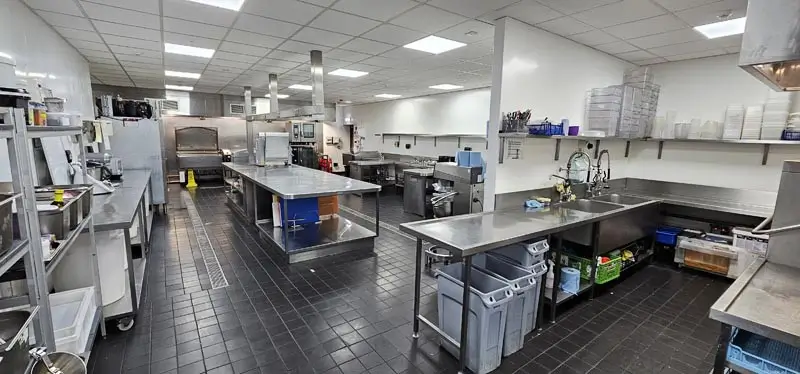
As food brands expand across multiple locations or delivery zones, maintaining consistent quality becomes increasingly difficult without centralised production. This is precisely the problem a central production kitchen is designed to solve, consolidating food preparation into a single, highly efficient facility that supplies multiple outlets or delivery channels.
The Core Idea Behind Centralised Production
Rather than preparing every dish from scratch at each individual outlet, a centralised facility handles bulk preparation, standardised recipes, and quality control from one location, then distributes finished or semi-finished products to individual points of sale or delivery kitchens. This approach reduces variability and helps ensure customers get a consistent experience regardless of which outlet or delivery order they receive.
For growing food brands, this consistency is often the difference between a scalable business and one that struggles to maintain quality as it expands beyond a single, closely supervised location.
Operational Advantages
Economies of Scale
Bulk purchasing of ingredients and more efficient use of equipment and labour at a centralised facility typically results in meaningful cost savings compared with preparing everything independently at each individual location.
Simplified Quality Control
With production concentrated in one facility, monitoring food safety standards, recipe consistency, and overall quality becomes considerably more manageable than trying to maintain the same standards across numerous scattered locations.
How This Supports Delivery-Focused Brands
For brands operating primarily through delivery, centralised production pairs particularly well with distributed delivery kitchens, allowing core food preparation to happen in one optimised facility while final assembly and packaging happen closer to the customer, reducing delivery times without sacrificing consistency.
To understand this model in more depth, resources explaining central production kitchen concepts can help food entrepreneurs evaluate whether this approach fits their specific growth plans and operational needs.
Considerations Before Adopting This Model
Centralised production is not automatically the right fit for every food business. Brands with highly customised, made-to-order menus may find the model less suitable than businesses with more standardised offerings that benefit from bulk preparation and consistent recipes across multiple locations.
See also: How Entrepreneurs Can Build Lasting Businesses
Logistics also become a bigger consideration, since getting food from the central facility to individual outlets or delivery kitchens efficiently requires reliable transport planning, particularly for perishable items that need to maintain freshness and food safety standards throughout the journey.
Who Tends to Benefit Most
Multi-location restaurant chains, catering businesses, and delivery-focused food brands expanding into new areas tend to see the most significant benefits from this model, given their need for consistency and efficiency at a scale that single-kitchen operations often struggle to maintain.
Frequently Asked Questions
Is this model only suitable for large food brands?
While larger brands often benefit the most due to scale, smaller businesses planning for growth can also use this model to establish consistent production processes early on.
How does this differ from a shared delivery kitchen?
A shared delivery kitchen typically focuses on final food preparation close to the customer, while centralised production handles bulk preparation earlier in the supply chain, with both models often used together.
What food safety measures are typically in place?
Centralised facilities generally follow strict food safety protocols, including temperature control and traceability systems, given the volume and scale of production involved.
Final Thoughts
For food brands serious about scaling without sacrificing consistency, understanding how centralised production works is an important step toward building operations that can grow sustainably across multiple locations or delivery zones.
